It starts with a reasonable question. "We noticed the results for the 25–34 female segment look different from last quarter. Can you tell us which suppliers contributed to that cell and what their quality metrics were?"
For an agency running operations through email and spreadsheets, this question triggers a research project. Inbox searches. Spreadsheet archaeology. Conversations with the PM who managed the study, if she is still with the company.
Sometimes the information is recoverable. Sometimes it is not. Always, the process of recovering it takes longer than it should, and the answer that eventually arrives carries an implicit message: our operations do not generate this information automatically.
What Information Should Be Available Immediately
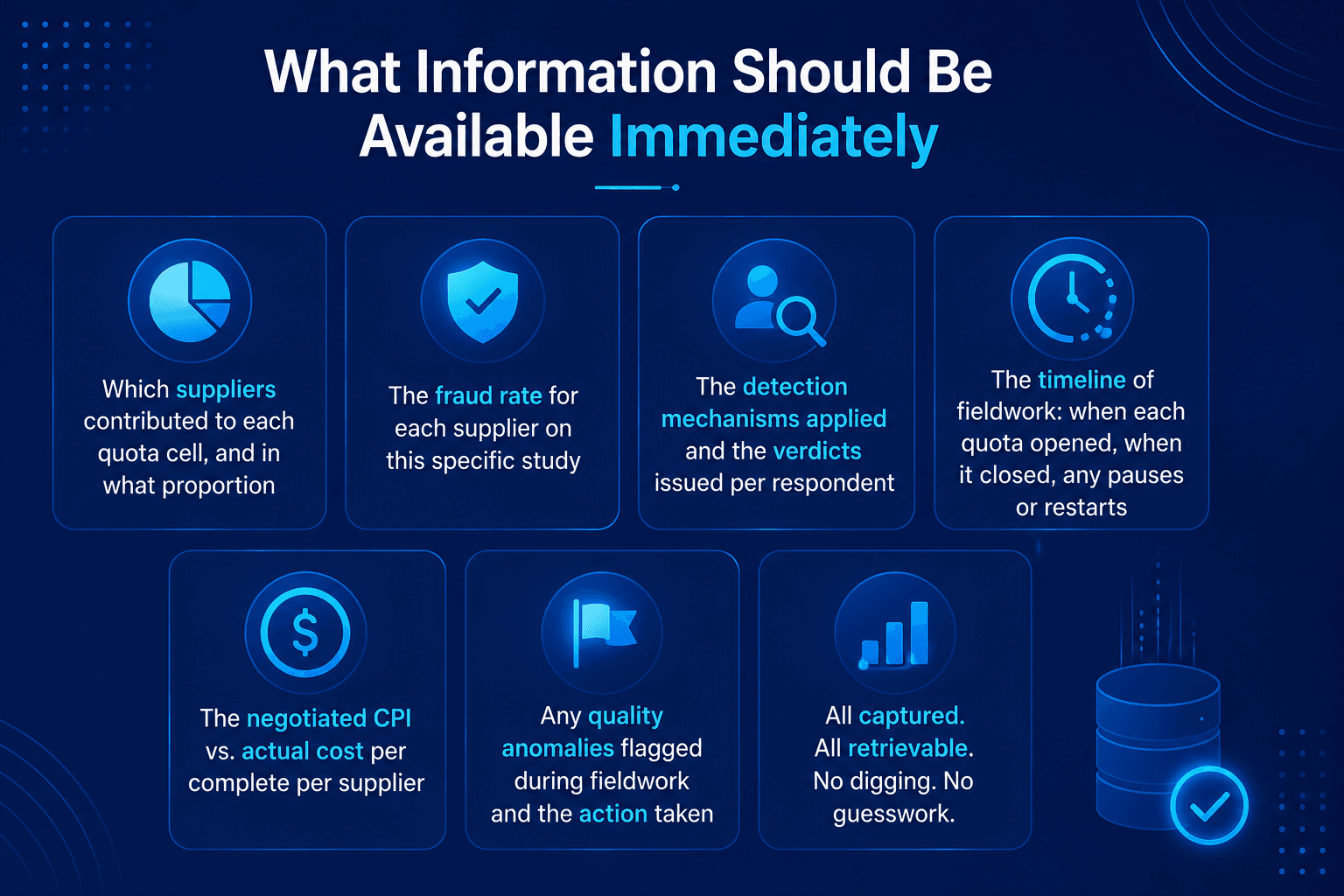
- Which suppliers contributed to each quota cell, and in what proportion
- The fraud rate for each supplier on this specific study
- The detection mechanisms applied and the verdicts issued per respondent
- The timeline of fieldwork: when each quota opened, when it closed, any pauses or restarts
- The negotiated CPI vs. actual cost per complete per supplier
- Any quality anomalies flagged during fieldwork and the action taken
All of this information is generated during the fieldwork process. The question is whether it is being captured in a form that makes it immediately retrievable, or whether it lives in email threads that may or may not still be accessible.
The Regulatory Dimension
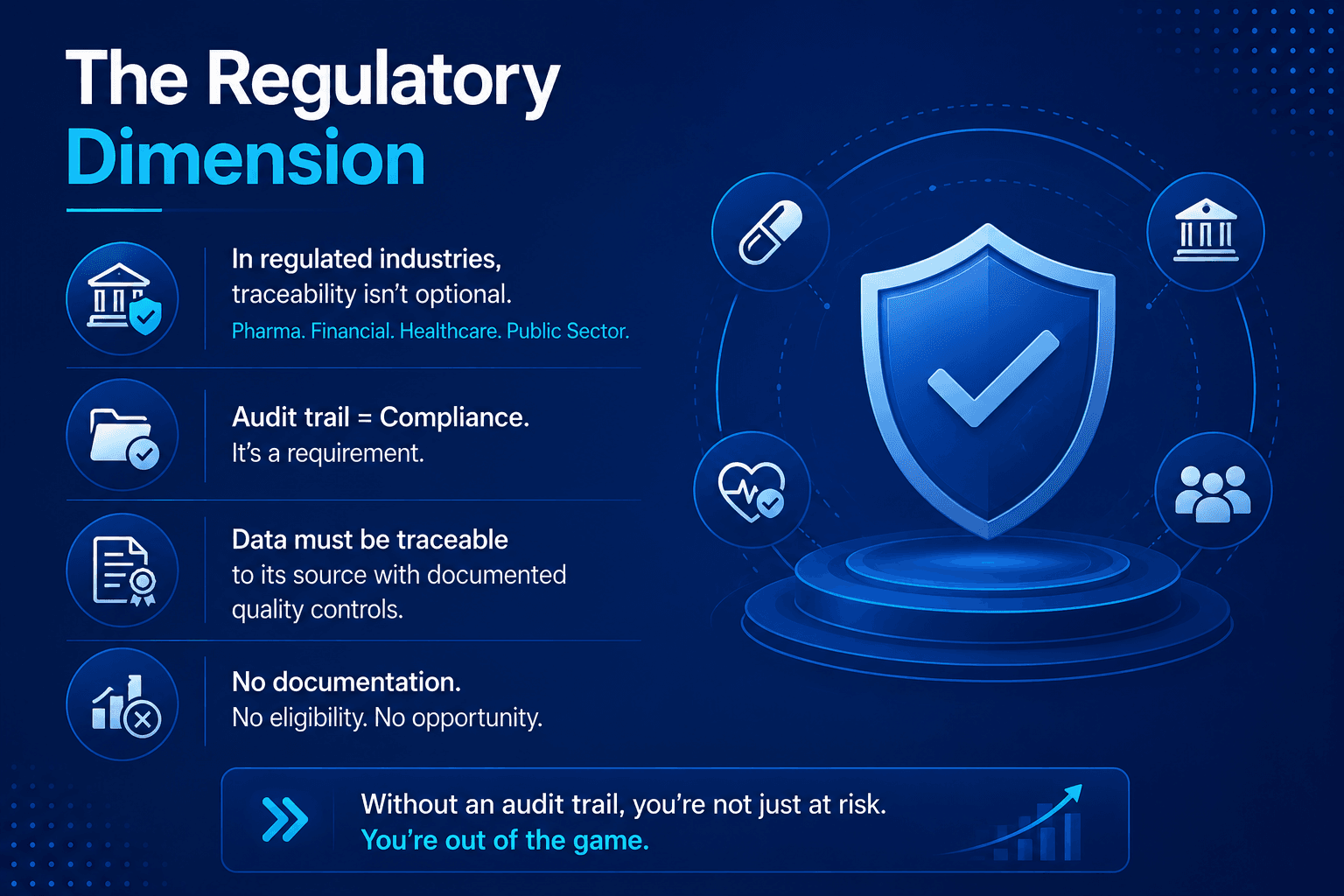
For agencies working in regulated industries — pharmaceutical, financial services, healthcare, public sector — the audit trail is not optional. It is a compliance requirement. Data used to support regulatory submissions, clinical decisions, or public policy must be traceable to its source with documented quality controls.
An agency that cannot produce this documentation is not just commercially vulnerable — it is operationally excluded from a significant and growing segment of the market research industry.
SoftSight FieldworkOS logs every action. Every decision. Every supplier interaction. softsight.io